


Sync and manage your iPhone or iPad without iTunes
Updated on Apr 16, 2026
Reading time ~8 minutes
iTunes was the main tool for managing Apple devices on Mac and PC for over a decade. Since macOS 10.15 Catalina, Apple moved device management and backups into Finder on Mac. On Windows, iTunes remains available alongside the newer Apple Device app. All of these offer a basic set of features: syncing media, updating iOS, and creating a single local backup. They do not provide access to messages, voicemail, call history, or granular file management.
iMazing is a desktop application for macOS and Windows that gives you full local control over your iPhone, iPad or iPod data. Here is what it covers and what remains outside its scope.
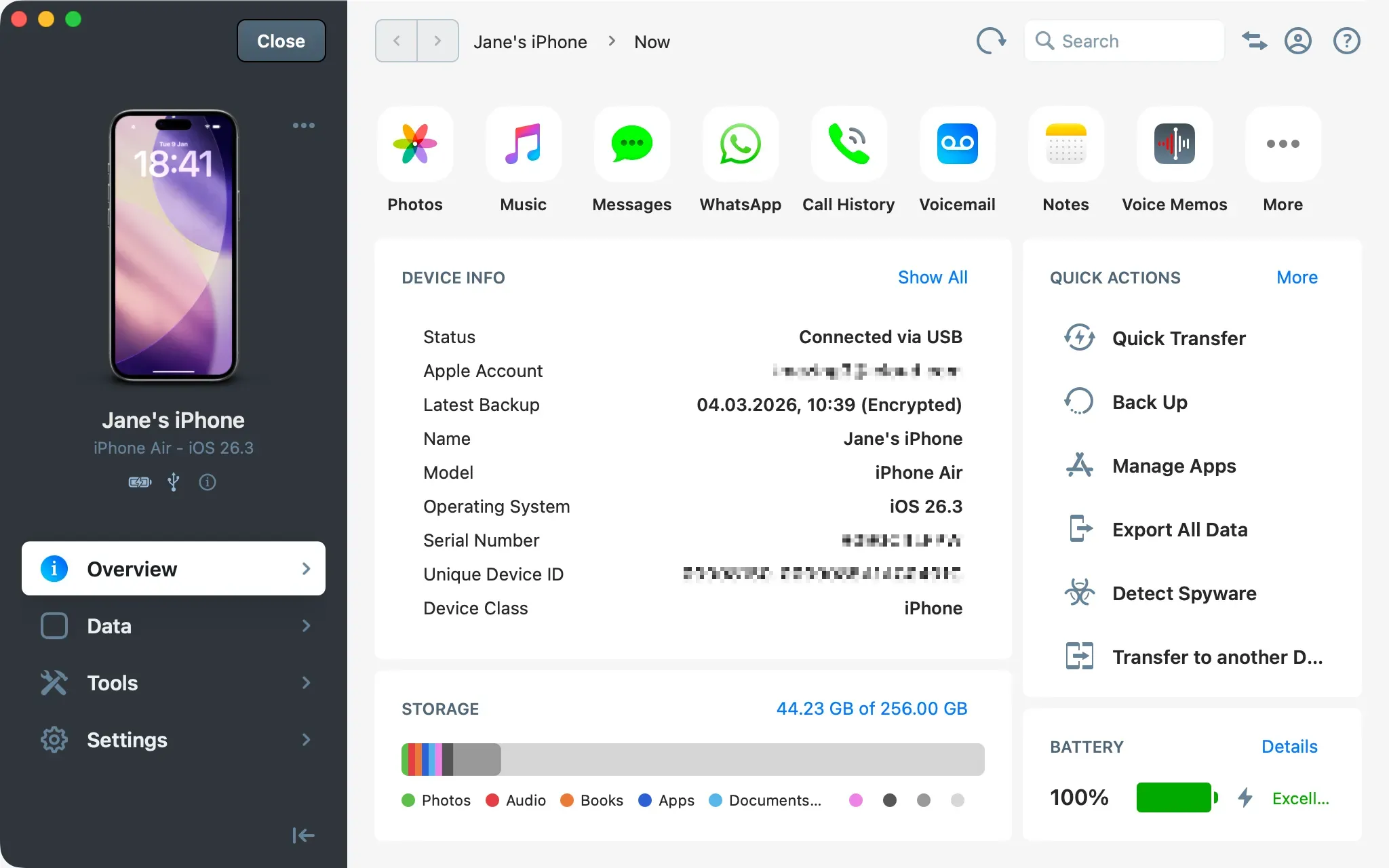
iMazing covers:
- Local backups with multiple snapshots and custom storage locations
- Browsing and exporting messages, voicemail, call history, WhatsApp and more
- Browse your music, photo, and transfer them easily
- File system browsing and app management
- iOS and iPadOS updates and reinstalls
- Access advanced device diagnostic tools, view logs, manage configurations, deploy blueprints, and supervise devices for power users and developers.
Outside iMazing's scope:
- iCloud sync (for now)
- iCloud backup management (for now)
- Apple Account management
Here's how to sync and manage your iPhone or iPad without iTunes.
Install iMazing and connect your device
Download and install iMazing
Download and install iMazing on your Mac or PC, then connect your iPhone or iPad via USB. On first connection, tap Trust on your device and enter your passcode to pair it with iMazing.
Once paired, your device appears in the Devices section. You can also connect wirelessly over Wi-Fi for subsequent sessions. Follow the instructions in How to connect your iPhone or iPad over Wi-Fi.
Back up your device
iMazing stores backups locally on your Mac or PC, and supports external drives and network drives as storage destinations. Unlike Finder, iTunes or the Apple Devices app, iMazing does not overwrite a single backup on each run. Instead, it maintains multiple timestamped snapshots per device, similar to how Time Machine works for your Mac. You can browse any snapshot independently, restore from it, or keep it archived indefinitely.
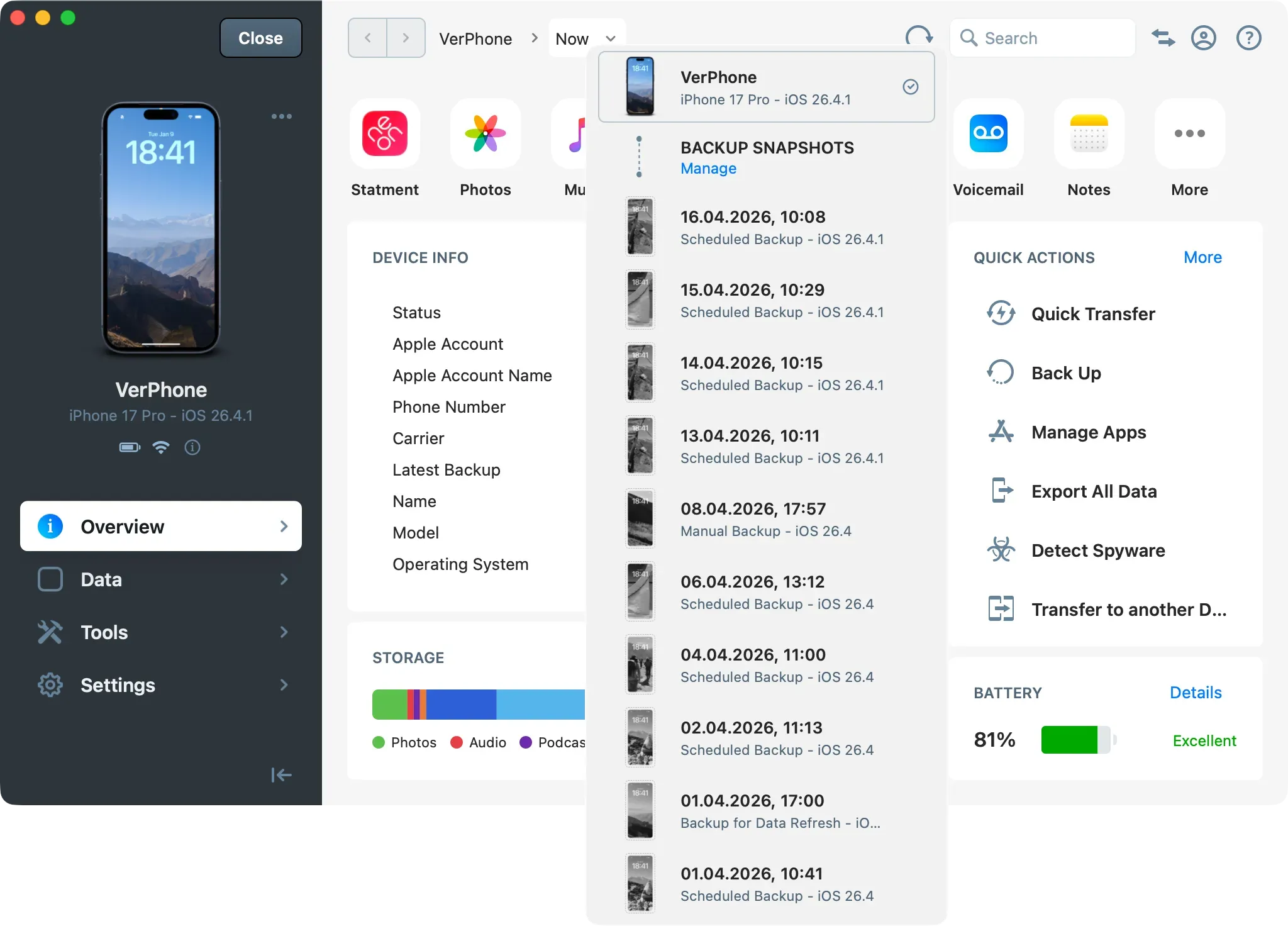
Key options available in iMazing:
- Encrypted backups: iMazing supports iOS encrypted backups, which are required to include Health data and passwords.
- Custom backup location: Store backups on an external drive or any folder on your computer.
- Automatic backups: Schedule backups over USB or Wi-Fi at a frequency you define.
- Snapshot management: Configure how many snapshots to keep per device.
Helpful tutorials:
- For full instructions, follow the guide on How to back up an iPhone, iPad, or iPod touch to your Mac or PC.
- To store your backup on an external drive, see How to back up your iPhone or iPad to an external drive.
- To set up automatic backups, follow the instructions in How to back up your iPhone automatically.
Access your messages, WhatsApp chats, voicemail, call history and many more personal data
Finder, iTunes, and Apple Devices are not providing access to messages, voicemail, call history, notes, voice memos, contacts, calendars, Safari history, or bookmarks stored on your device. iMazing lets you browse and export all of these directly from your device or from any backup snapshot.
- Messages: Browse your full SMS, MMS, and iMessage history. Export to PDF, Excel, or CSV. See How to export iPhone text messages and iMessages to your computer.
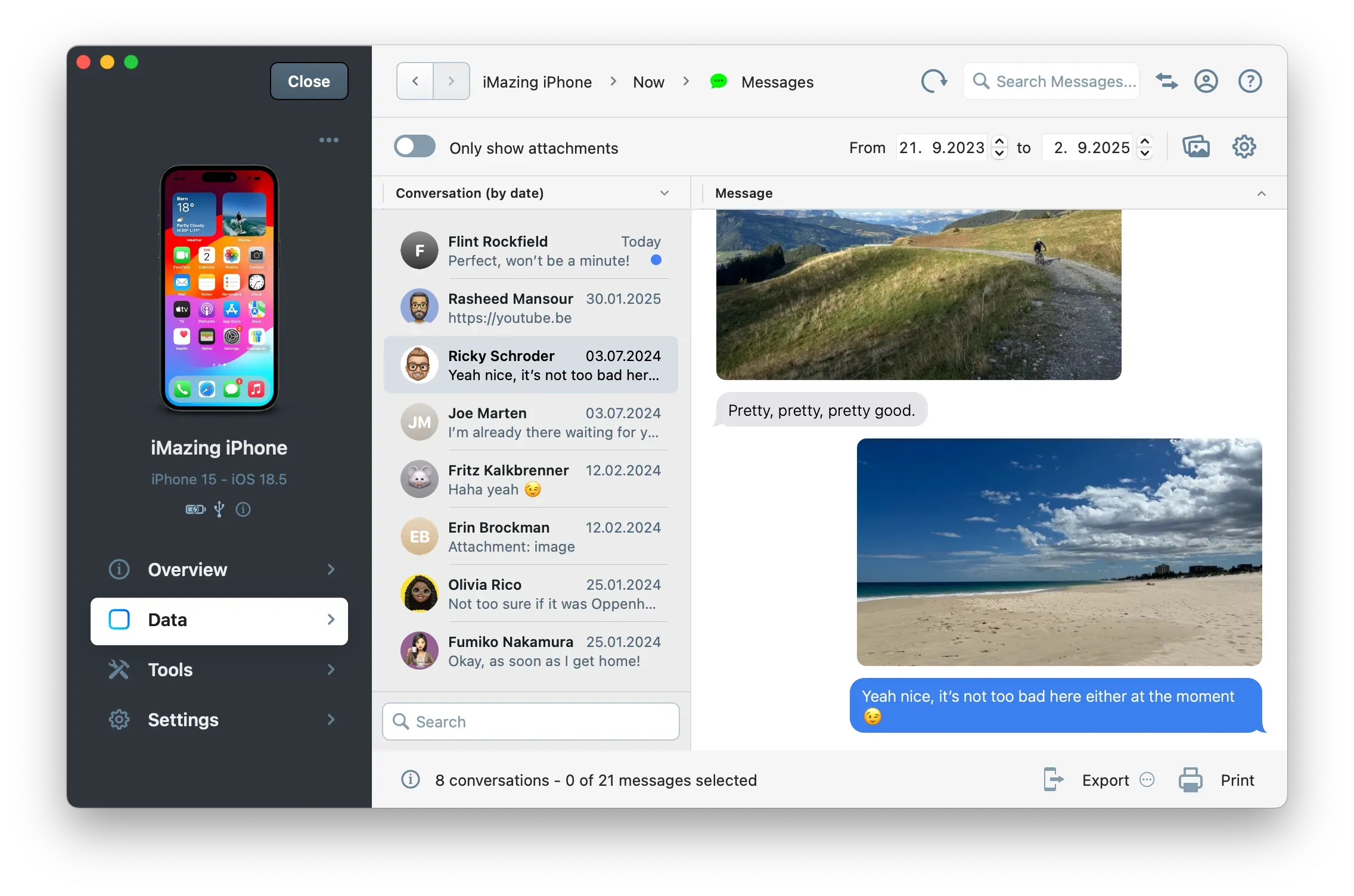
- WhatsApp: Export WhatsApp chats independently of the app's own backup system. See How to export WhatsApp chats from iPhone to your computer.
- Voicemail: Listen to voicemail recordings and export them as audio files. See How to save iPhone voicemail to your computer.
- Call history: View and export your incoming, outgoing, and missed calls. See How to transfer call history from iPhone to a Mac or PC.
- Contacts: Browse, edit, and export your contacts. See How to transfer iPhone contacts to your Mac or PC.
- Calendars: View and export your calendar events. See How to export iPhone and iPad calendars to iCal, Excel or CSV.
- Notes: Browse and export your notes. See How to transfer iPhone notes to your Mac or PC.
- Voice Memos: Export voice memo recordings to your computer. See How to transfer iPhone voice memos to your Mac or PC.
- Safari data: View and export your Safari history, bookmarks and reading list. See How to export iPhone Safari history and bookmarks to Mac or PC.
Transfer music, photos, videos, and other media
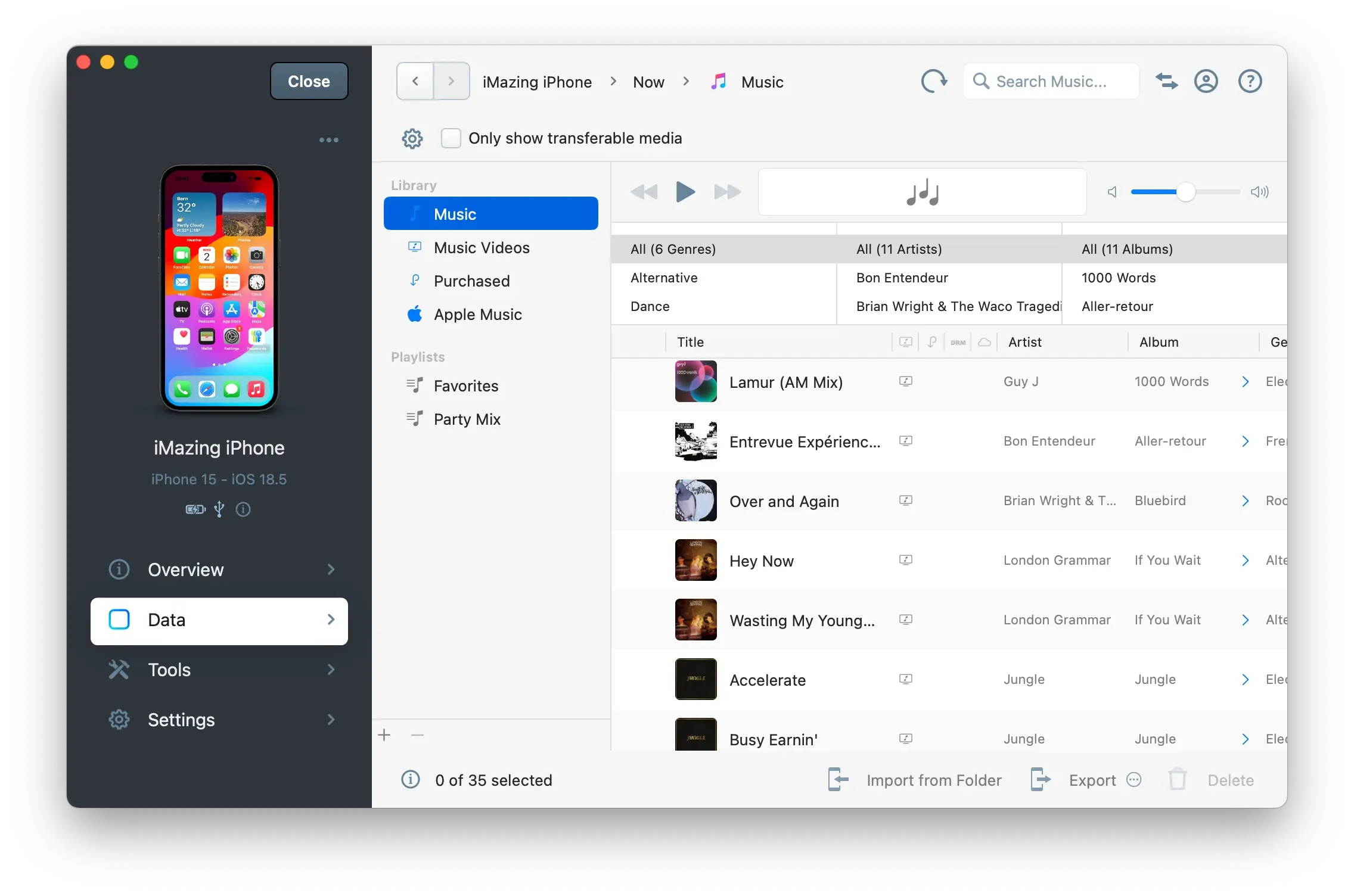
Finder, iTunes, or Apple Devices sync required selecting content via checkboxes and syncing the entire library. iMazing lets you transfer individual files, albums, or folders by drag and drop, with no sync required.
- Music: Copy tracks from your iPhone or iPod to your Mac or PC without overwriting your library. See How to transfer music from iPhone to your computer and How to transfer music from a Mac or PC to an iPhone or iPad.
- Photos: Export photos and videos to any folder on your computer. See How to manage and transfer photos between iPhone and computer.
- Videos: Transfer movies and TV shows to the TV app or to third-party players like VLC or Infuse on your device. See How to transfer movies from your computer to VLC or Infuse on your iPhone or iPad.
- Books: Manage and transfer ePub books and PDFs to and from your device. See How to manage iBooks and ePub books and How to transfer iBooks and ePub books to your iPhone or iPad.
- Audiobooks: Transfer audiobooks to and from your device alongside your book library.
- Podcasts: Transfer podcast episodes to and from your device.
- Ringtones: Import custom ringtones and notification sounds, or export existing ones. See How to add ringtones to iPhone.
- Files: Transfer files to and from apps that support file sharing. See How to browse and transfer iPhone files and folders.
Browse your device's file system
iMazing gives you access to the file system of your device and its installed apps. You can navigate the folder structure, copy files in and out, create folders, and delete files — all from your Mac or PC.
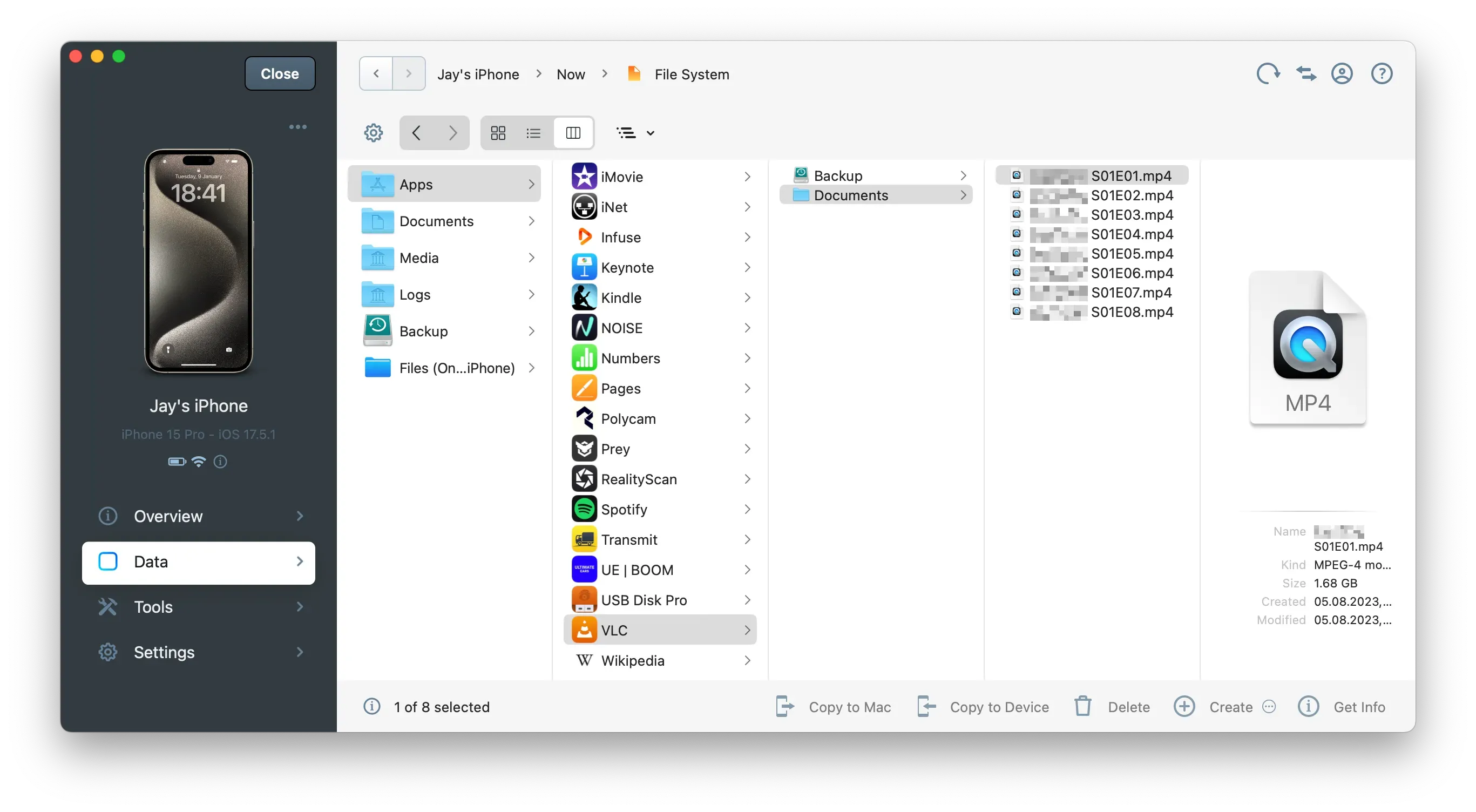
Note: Access to app data requires the app to have file sharing enabled, or that the data is included in a backup. System-level folders are read-only.
For full instructions, follow the guide on File system view in iMazing.
Manage apps
iMazing lets you download apps from the App Store, install, update, and remove apps on your device directly from your Mac or PC. You can also back up and restore individual app data independently of a full device backup.
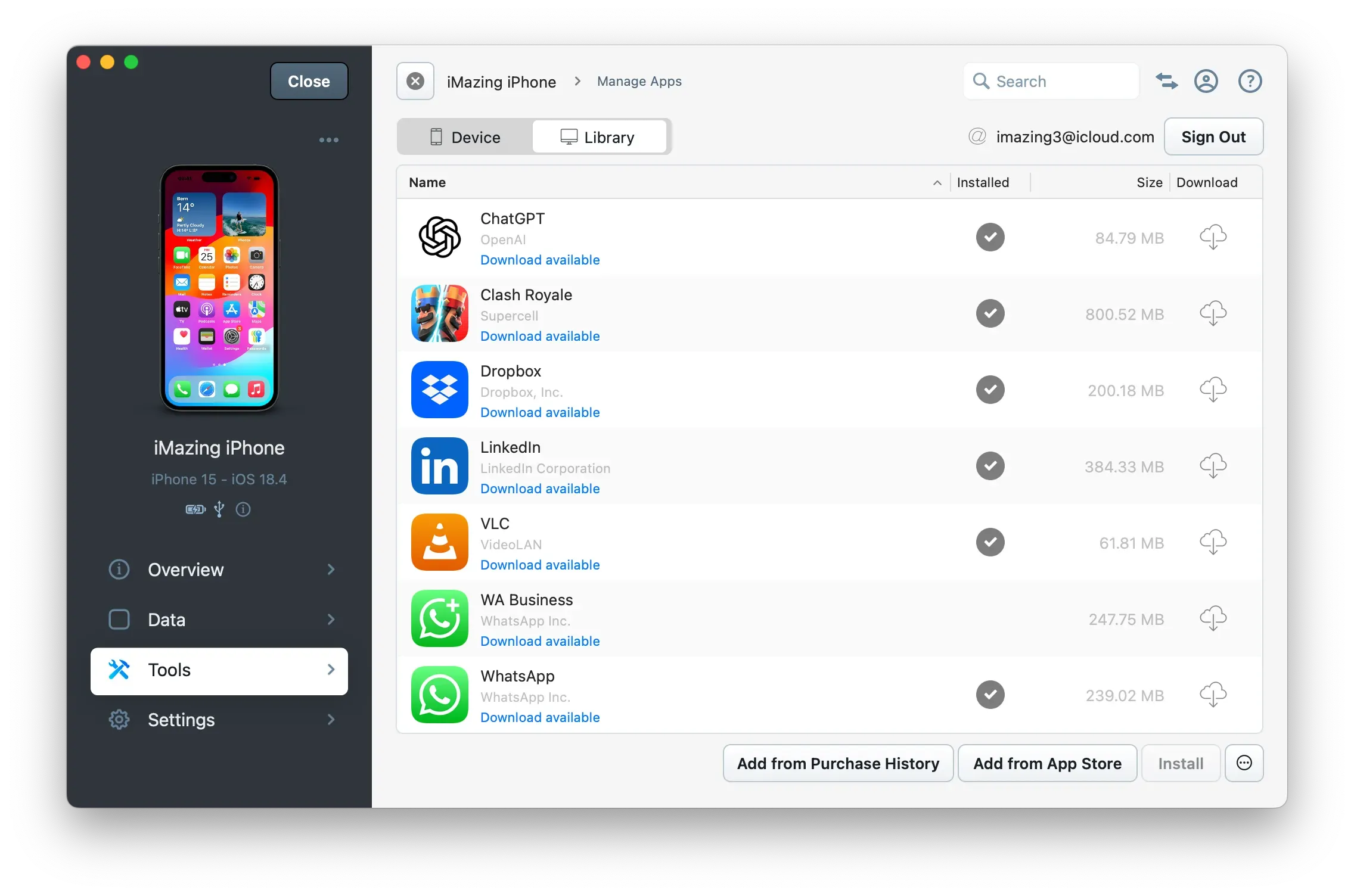
- Download and install apps from the App Store using your Apple Account.
- Store multiple app versions in the iMazing library.
- Install
.ipafiles directly on your device. - Uninstall apps.
- Back up a single app's data before updating or deleting it.
- Restore app data to the same app or transfer it to another device.
For full instructions, follow the guide on How to manage apps without iTunes.
Update or reinstall iOS
iMazing lets you update or reinstall iOS and iPadOS on your iPhone or iPad directly from your Mac or PC, without going through Finder, iTunes, or the Apple Devices app. Both operations require a USB connection and are available on macOS and Windows.
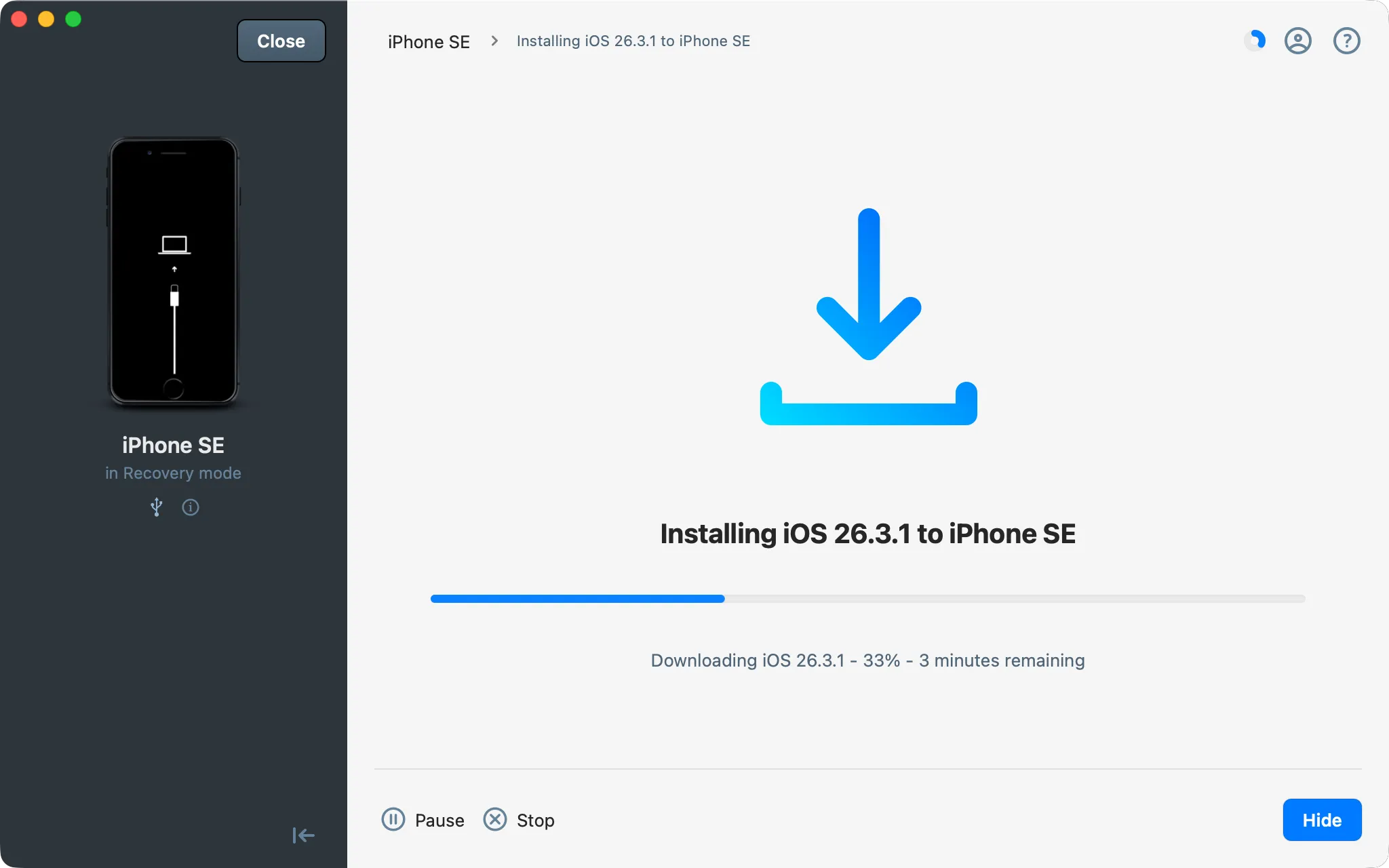
- Update iOS: Install the latest available version of iOS or iPadOS. iMazing can either download the iOS image file (IPSW) from Apple's servers or let you choose one, and then install it on your device. See How to update iOS on your iPhone, iPad or iPod touch.
- Reinstall iOS: Reinstall the current version of iOS or iPadOS without erasing your data. Useful when a device behaves erratically after a failed update or a persistent software issue. iMazing can also help you exit Recovery mode, or reinstall iOS on a device stuck in DFU mode. See How to reinstall or restore iOS on a malfunctioning iPhone or iPad.
Note: Back up your device before updating or reinstalling iOS. Use the Back Up tool or follow the instructions in section 2.
Additional tools
iMazing includes tools that go well beyond what Finder, iTunes, or Apple Device offer.
- Detect Spyware: Scan your device for traces of spyware, including Pegasus and other advanced threats. See Detect Pegasus and other spyware on iPhone.
- Export all data: Export everything from your device or backup in a single operation. See How to easily export all iPhone data to Mac or PC.
- Battery diagnostics: View detailed battery health data and export a full diagnostic report. See How to check iPhone and iPad battery health.
- Device logs and diagnostics: Access the live device console, export unified logs, crash reports, and sysdiagnose files. Useful for troubleshooting or sharing with support teams. See Tools section in iMazing.
- Developer tools: Enable Developer Mode, simulate a custom geolocation, capture network or Bluetooth traffic, take screenshots, and install custom packages. See Tools section in iMazing.
- Manage Profiles: Manage configuration and provisioning profiles. See How to install, remove or export iOS Provisioning and Configuration profiles
- Enroll in MDM: Migrate iOS devices from one MDM to another via Automated Device Enrollments, while preserving the device’s data.
- iMazing Profile Editor: Create, edit, and manage Apple configuration and provisioning profiles on your devices. See How to manage configuration profiles and Getting started with iMazing Profile Editor.
- iMazing Configurator: Manage multiple devices in bulk with blueprints and MDM enrollment. See iMazing Configurator overview.
- Browse iOS backup files: View the contents of an iPhone or iPad's backup
- Edit iOS backups: Edit an iPhone or iPad's backup
To get up and running, follow the instructions in Getting started with iMazing.