


Turn off 'Find My' on your iPhone
Find My is Apple's device tracking and security feature. When enabled on your iPhone, it lets you locate the device on a map, play a sound to find it nearby, put it in Lost Mode, or erase it remotely. It also turns on Activation Lock, which ties the device to your Apple Account and prevents anyone else from activating it.
Whether your iPhone is about to be restored from a backup with iMazing or move on to someone new, Find My needs to be off. Once it is, iMazing can go ahead with the restore, and the next owner can activate the iPhone with their own Apple Account.
Here's how to turn off 'Find My' on your iPhone.
Turn off Stolen Device Protection
Stolen Device Protection is available on iOS 17.3 or later and might be enabled by default. While it is enabled, Find My cannot be turned off. If your iPhone runs an earlier version of iOS, or if Stolen Device Protection is already turned off, continue with section 2.
- Open Settings, tap Face ID & Passcode (or Touch ID & Passcode on an iPhone with a Home button), then enter your passcode.
- Scroll down and tap Stolen Device Protection.
- Turn off Stolen Device Protection.
At a familiar location, such as home, work, or another place where you regularly use your iPhone, the change applies immediately.
Away from familiar locations, or when Require Security Delay is set to Always, a Security Delay applies. Tap Start Security Delay, then follow the onscreen instructions: authenticate with Face ID or Touch ID, wait one hour, then authenticate with Face ID or Touch ID again.
Note: Your iPhone may end the Security Delay early when it detects that you have arrived at a familiar location.
Turn off Find My
There are two ways to turn off Find My: directly on your device, or remotely via iCloud.com.
From your device
- Open Settings, tap your name, then tap Find My.
- Tap Find My iPhone, then turn it off.
- Enter your Apple Account password, then tap Turn Off.
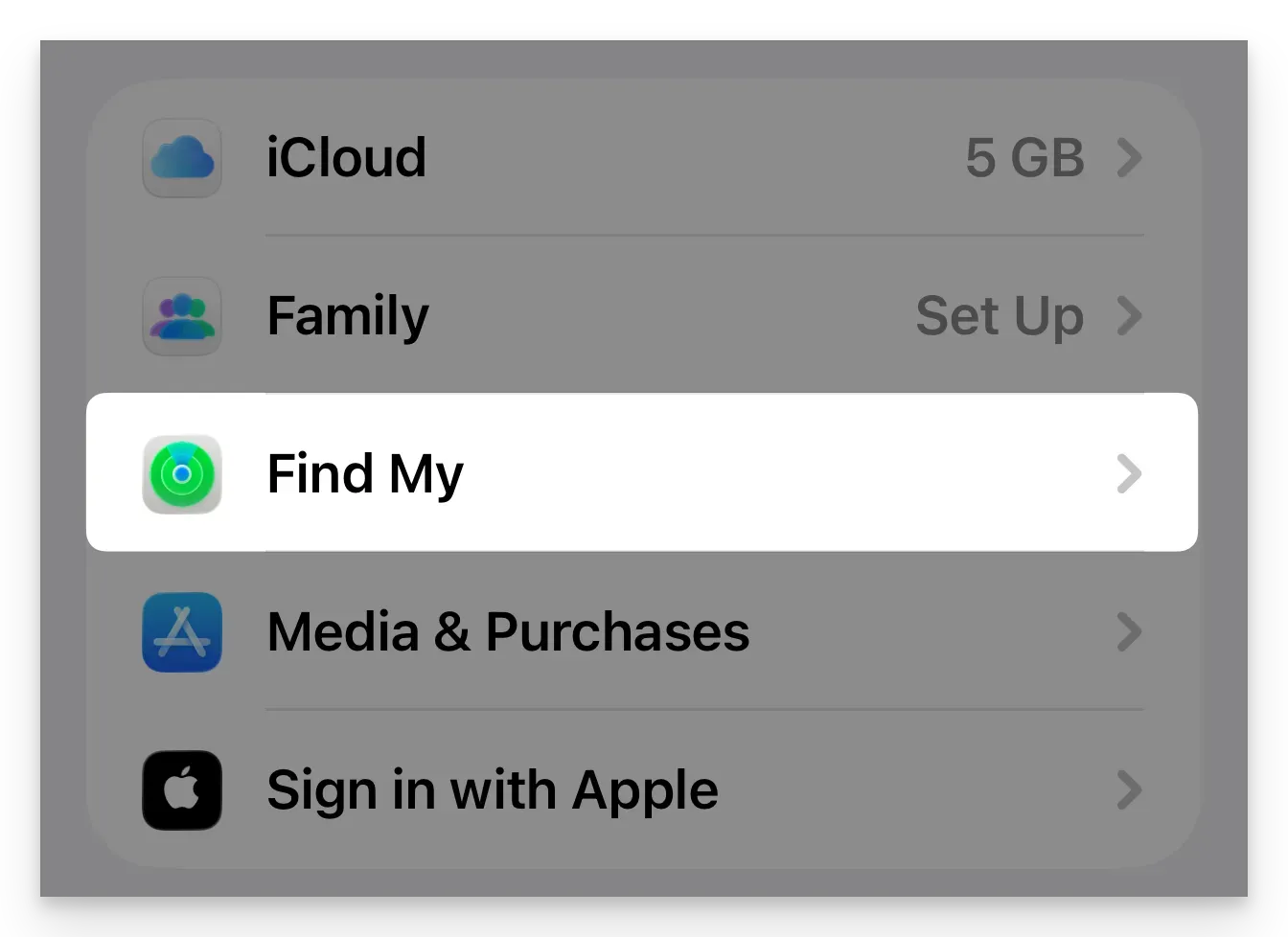
Note: Since iOS 13, Find My iPhone is called Find My. On iOS 10.3 to iOS 12, the setting is in Settings > [your name] > iCloud > Find My iPhone. On iOS 10.2 or earlier, it is in Settings > iCloud > Find My iPhone.
From iCloud.com
If you no longer have your iPhone, remove it from your Apple Account on iCloud.com. Remove appears only while the iPhone is offline: turned off, or not connected to Wi-Fi or a cellular data network. If you sold or gave away your iPhone and Remove does not appear, click Erase on the device card first, then remove the iPhone once the erase is complete.
- On your computer, go to icloud.com/find and sign in to your Apple Account.
- Under All Devices, select your iPhone.
- Click Remove.
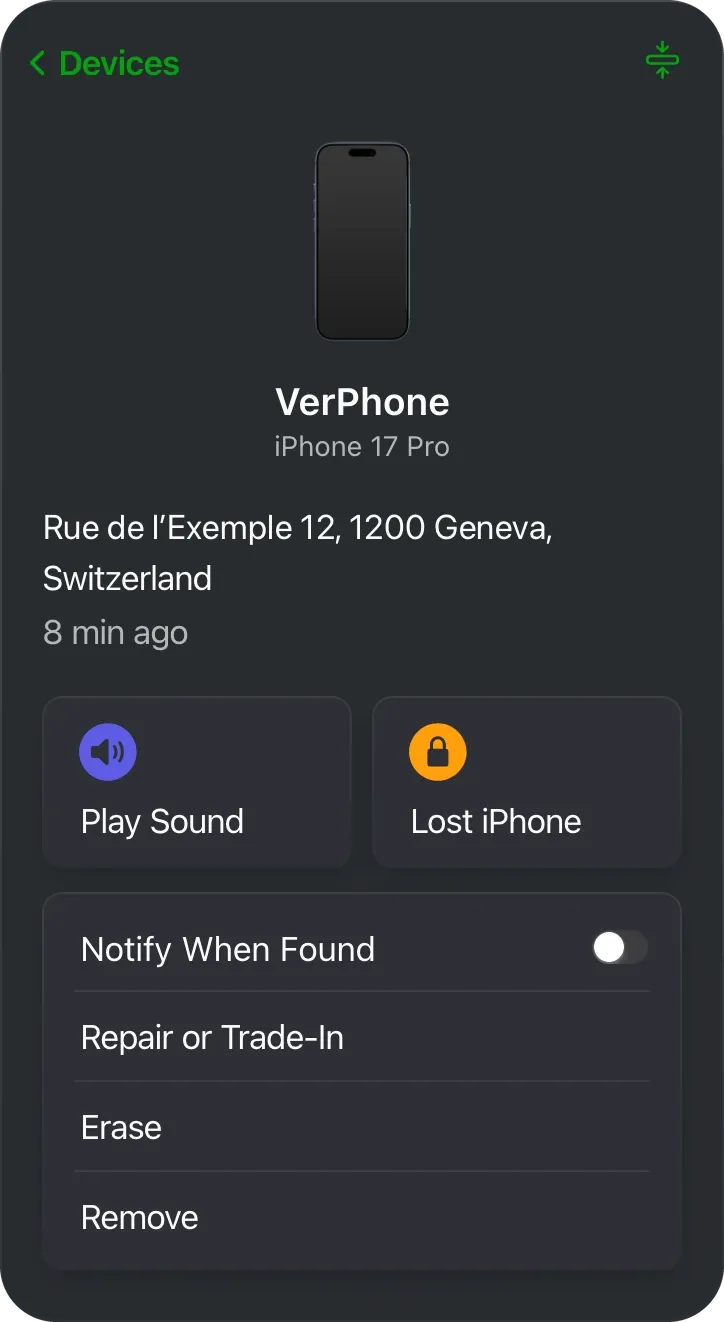
Activation Lock is removed immediately. Your iPhone disappears from your device list in Find My after 30 days.
Important: If your iPhone comes back online after these 30 days and is still signed in to your Apple Account, it reappears in Find My and Activation Lock turns back on.
What to keep in mind
- Once Activation Lock is removed, someone else can activate the iPhone and connect it to their own Apple Account.
- When you restore a backup with iMazing and Find My is on, iMazing asks you to turn it off before the restore continues. See Restore an iPhone, iPad or iPod touch from a local backup.
- Stolen Device Protection requires Find My. When you turn Find My back on, turn Stolen Device Protection back on in Face ID & Passcode or Touch ID & Passcode.
- Before you sell, give away, or trade in your iPhone, turn off Stolen Device Protection and Find My. For the complete procedure, see Safely wipe your iPhone or iPad before trading it in or reselling it.