


Edit an iPhone or iPad's backup
At first glance, editing an iPhone or iPad's backup seems like a strange proposition. But there are actually quite a few very good reasons to do so:
- Repairing corrupted backups.
- Restoring data from a bricked device without restoring the settings which bricked it in the first place.
- Merging data from different devices.
Some tools only offer light backup editing, such as removing data from backups. iMazing goes further: you can add files, folders, and apps to backups, even when they are encrypted and regardless of the iOS version (works with iOS 10 and above). If you need to recover only Messages or Health data, delete corrupted settings, or inject files into an app, iMazing can handle it.
The video bellow allows you to see this feature in action. In this example, an old iOS device's messages are being transfered to an iPhone that already has important data on it:
Note: Backup editing is an advanced feature recommended only for experienced users. If you're unsure whether you should edit your backup, you probably shouldn't, there's likely a simpler way to achieve your goal. Check out our backup guides to see what you can do before resorting to backup editing.
Here's how to edit an iPhone or iPad backup:
Before you begin
Always make sure you are running the latest iMazing version, to do so select Check for Updates from the iMazing menu, or just download the latest available version for your computer below.
Download and install iMazing
Step-by-step instructions
Launch iMazing on your computer
If you haven’t already, download and install iMazing. For more details please refer to our guide available for PC and for Mac.
Select the Backup
From the Backups view, you will see all the backups previously created on your computer. Click to select the device backup you want to edit.
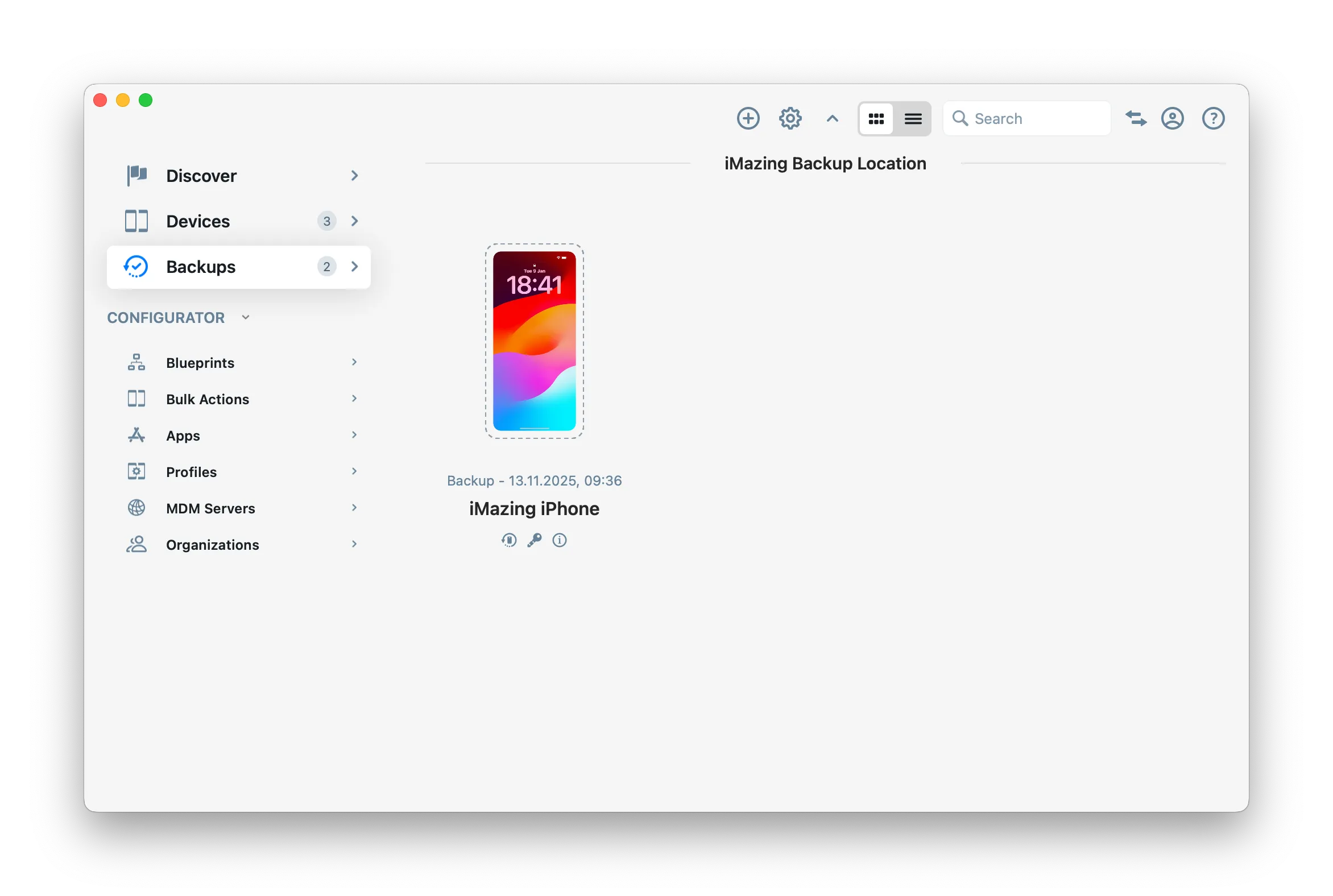
Select a specific backup
By default, iMazing shows the most recent snapshot for this device. To choose a different one, click the backup date in the path at the top of the window.
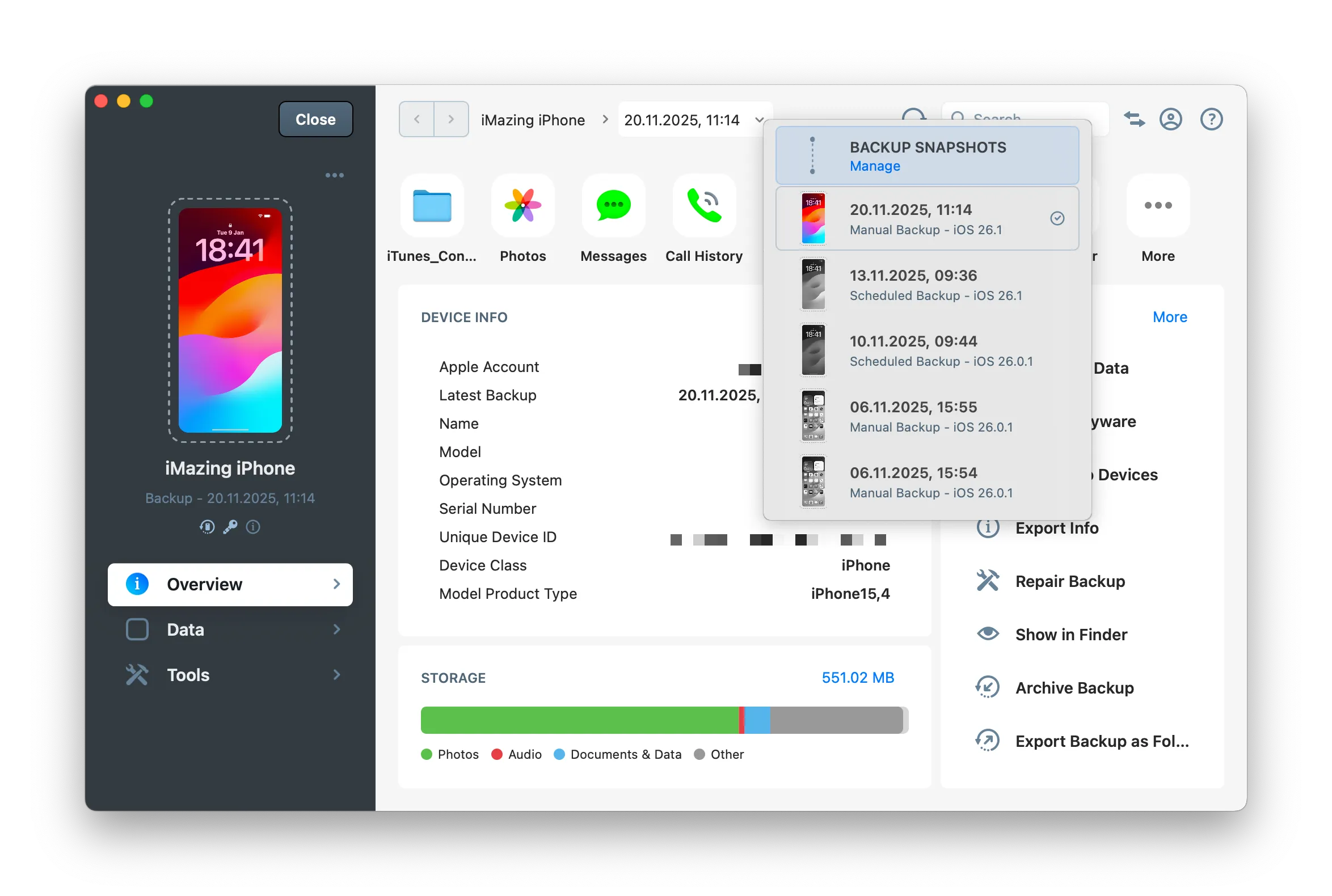
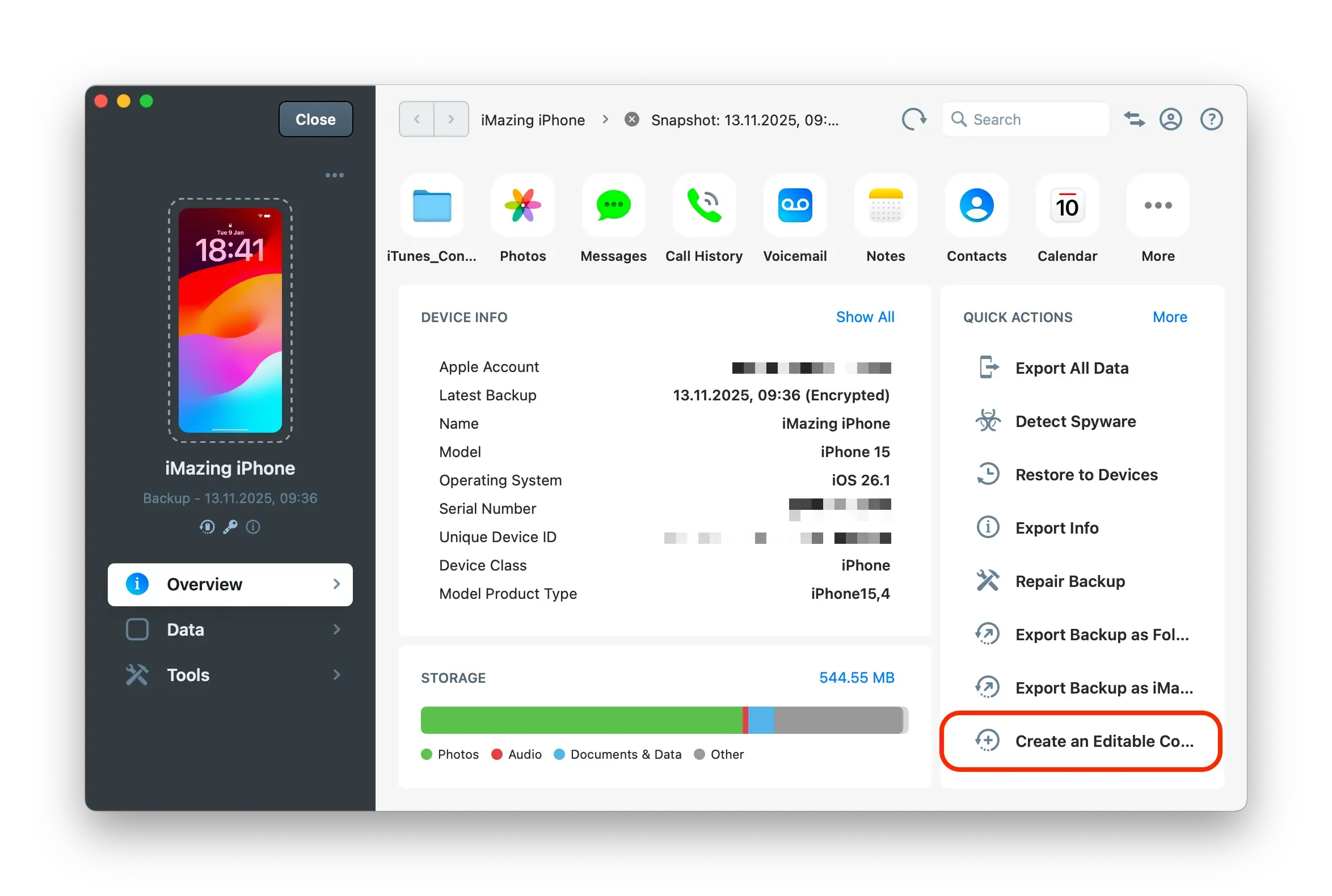
Click on Create and Editable Copy
Once you've selected the backup you want to edit, on the right side in the Quick Actions panel, click on Create an Editable Copy of this Backup. This will create an editable copy of the selected backup.
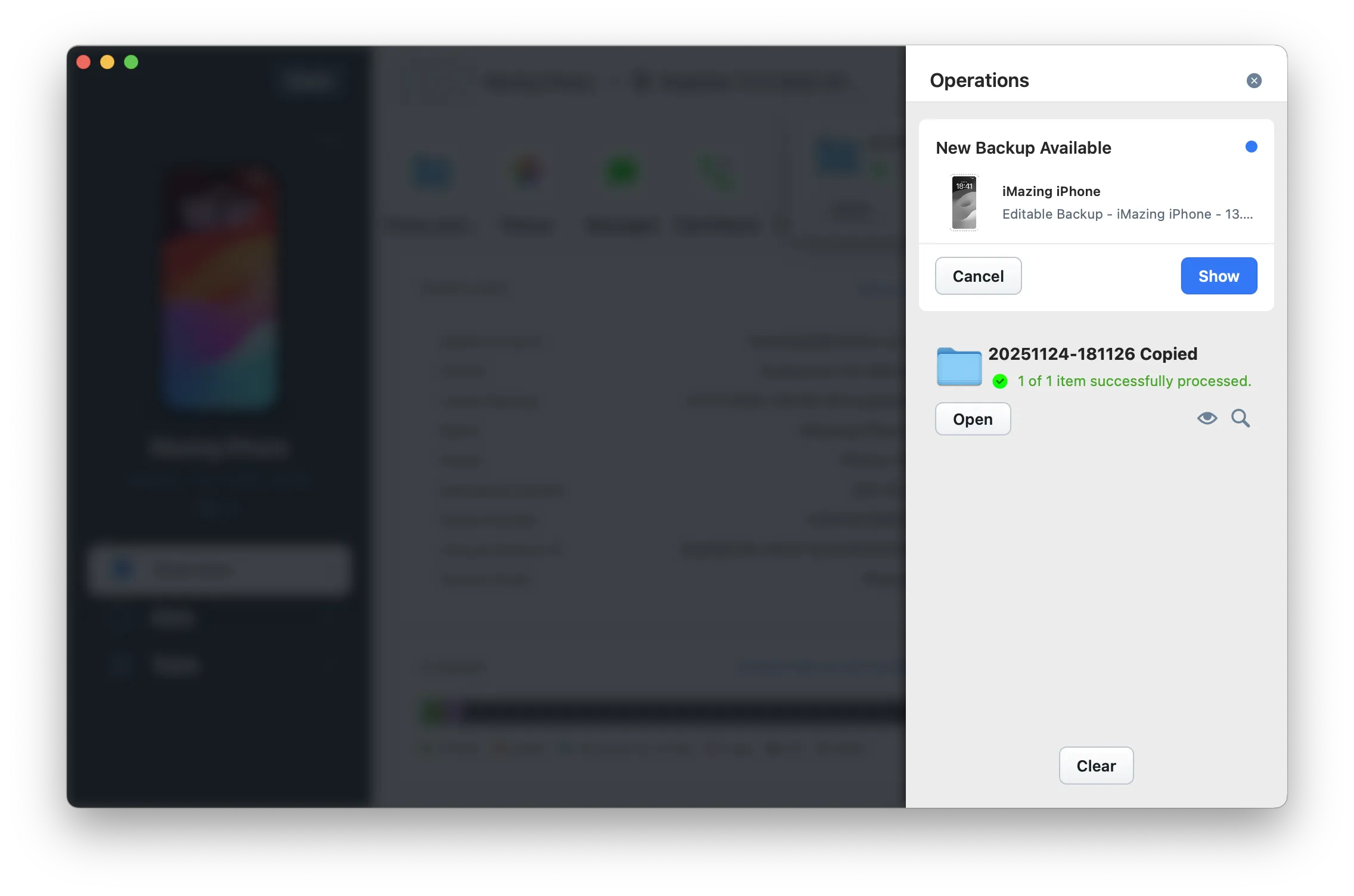
iMazing will prompt you to choose a name for this editable backup. Once the process is complete, your editable backup will appear in the Backups section.
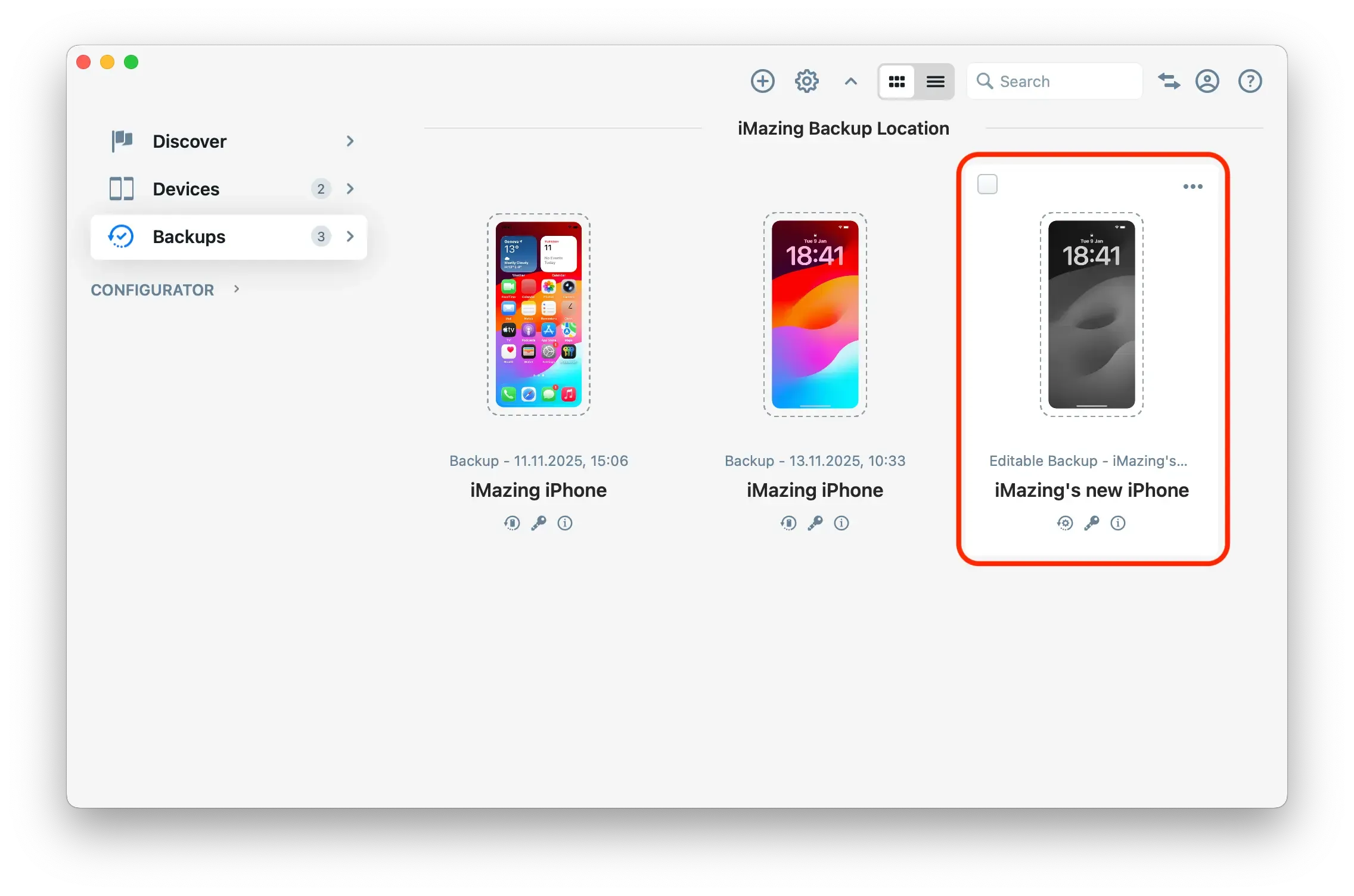
You can also clik on Show from the Operations pannel to access it directly.
Edit the Backup
You can now safely edit the backup using the File System section's tools. You can also choose to add or remove apps. Some restrictions apply when editing backups. Apps (virtual folder): Contains all app domains (AppDomain). Each AppDomain is the sandboxed container of a specific app.
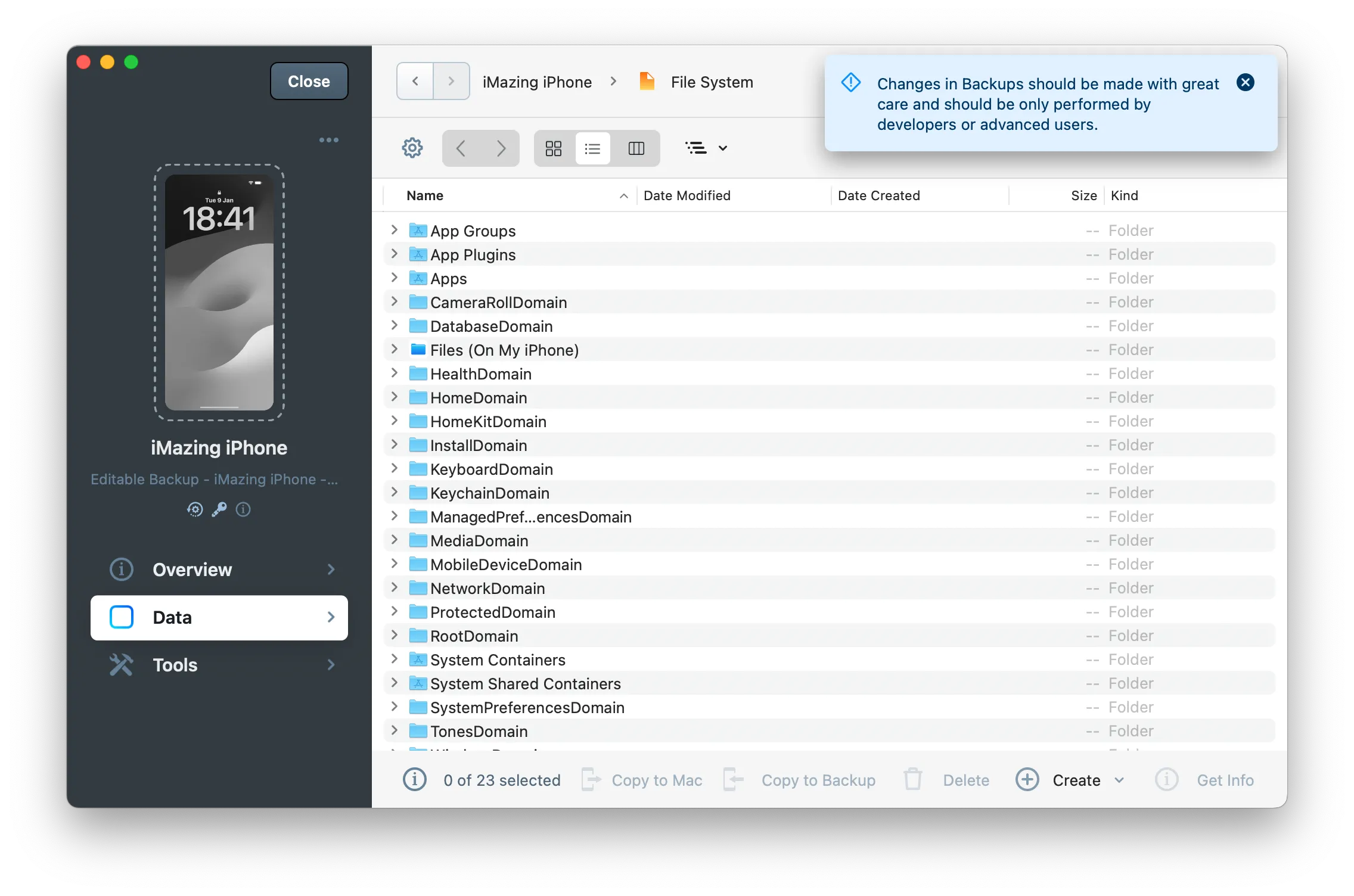
Tip: For a complete list of all backup domains and their contents, see Backup Domains in our iOS digital forensic analysis and e-discovery guide.
What to keep in mind
- To view the contents of a file, double-click it to open a copy. Changes you make to this copy will not affect your editable backup.
- To edit a file, extract it from your backup to your computer, make the changes, save it, and copy it back to the backup.
- To avoid taking up unnecessary disk space, iMazing will create a shallow copy of your backup. Only the changes you make will use up space on your hard drive.
- Some changes might corrupt your backup, and prevent you from restoring it. Proceed with caution.
- On Windows PCs, you can only edit backups if you are running the 64-bit version of Windows.